Hisense

Hisense, Televisions

Ultimate Home Theater: Hisense 100-inch Mini-LED TV & Soundbar Bundles

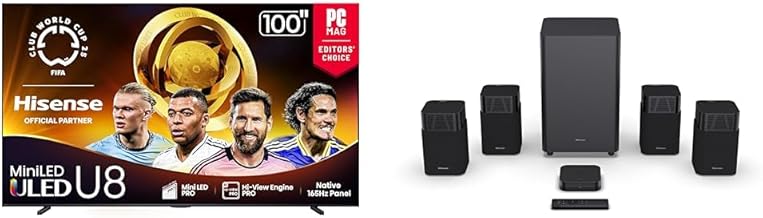
Home Theater • Product Bundles Ultimate Home Theater: Hisense 100-inch Mini-LED TV & Saturn Soundbar Bundles Experience true cinematic immersion with Hisense’s massive 100-inch Mini-LED TVs paired with the premium HT Saturn 4.1.2Ch Dolby Atmos soundbar. These complete home theater bundles deliver theater-quality picture and sound that will redefine your entertainment experience. 100-inch TVHisense U8Home TheaterDolby Atmos Flagship Pro Hisense 100U8QG Mini-LED 4K UHD Smart Google TV + HT Saturn 4.1.2Ch Sound Bar $4,397.98 Professional-grade home theater with 5000 nits peak brightness, 5000 local dimming zones, and the premium HT Saturn 4.1.2Ch Dolby Atmos soundbar system. TV Specifications Display Size 100 inches Peak Brightness 5000 nits Dimming Zones 5000 Refresh Rate 165Hz Native VRR 288Hz Sound System Soundbar HT Saturn 4.1.2Ch Audio Format Dolby Atmos & DTS:X Subwoofer Wireless Connectivity Bluetooth 5.3, 4K HDMI Smart Features Hi-Concerto, 5 EQ Modes 5000 Nits Brightness – Industry-leading peak brightness for stunning HDR 5000 Dimming Zones – Precision local dimming eliminates halos 4.1.2 Dolby Atmos – True overhead sound with up-firing speakers 288Hz VRR Gaming – AMD FreeSync Premium Pro with ultra-low latency View U8 Bundle on Amazon Premium Performance Hisense 100U75QG Mini-LED 4K UHD Smart Google TV + HT Saturn 4.1.2Ch Sound Bar $3,097.99 Exceptional home theater value with 3000 nits brightness, 3000 local dimming zones, and the same premium HT Saturn 4.1.2Ch Dolby Atmos soundbar system. TV Specifications Display Size 100 inches Peak Brightness 3000 nits Dimming Zones 3000 Refresh Rate 165Hz Native VRR 288Hz Sound System Soundbar HT Saturn 4.1.2Ch Audio Format Dolby Atmos & DTS:X Subwoofer Wireless Connectivity Bluetooth 5.3, 4K HDMI Smart Features Hi-Concerto, 5 EQ Modes 3000 Nits Brightness – Exceptional HDR performance with brilliant highlights 3000 Dimming Zones – Advanced local dimming for deep blacks 4.1.2 Dolby Atmos – True overhead sound with up-firing speakers 288Hz VRR Gaming – AMD FreeSync Premium Pro for smooth gameplay View U7 Bundle on Amazon Complete Home Theater Solution Both bundles include the premium HT Saturn 4.1.2Ch Dolby Atmos soundbar, eliminating the guesswork of matching TVs with sound systems. Get perfectly calibrated picture and sound that work seamlessly together. HT Saturn 4.1.2Ch Soundbar: Premium Dolby Atmos Audio Both bundles include the same premium HT Saturn soundbar system, delivering true cinematic audio that perfectly complements the massive 100-inch displays. 🔊 4.1.2 Channel Four main channels, wireless subwoofer, and two up-firing speakers for true Dolby Atmos overhead effects 🌐 Dolby Atmos & DTS:X Advanced surround sound formats create a three-dimensional soundscape with precise object-based audio 📶 Bluetooth 5.3 Latest Bluetooth technology for stable wireless streaming from your devices 🔄 Hi-Concerto Seamlessly integrates TV speakers with soundbar for expanded sound field and immersive audio experience 🎛️ 5 EQ Modes Optimize sound for movies, music, sports, news, or night mode with customizable audio profiles 📺 4K HDMI Pass-Through Connect all your 4K devices directly to the soundbar with HDMI ARC/eARC support Why 100-inch TV Bundles Transform Home Entertainment A 100-inch television isn’t just a bigger screen—it’s an entirely different viewing experience. When paired with the premium HT Saturn 4.1.2Ch Dolby Atmos soundbar system, these Hisense bundles create a home theater that rivals commercial cinemas. The combination of massive scale, cutting-edge Mini-LED technology, and immersive audio represents the pinnacle of home entertainment technology. 🎬 True Dolby Atmos Experience The HT Saturn 4.1.2Ch soundbar delivers genuine overhead audio with up-firing speakers. Unlike traditional soundbars that simulate height channels, the Saturn’s dedicated upward-firing drivers bounce sound off your ceiling to create authentic overhead effects. Combined with the massive 100-inch screen, the result is a fully immersive experience that places you at the center of the action. Mini-LED Pro Technology: Picture Quality Revolution Both the U8 and U7 bundles feature Hisense’s advanced Mini-LED Pro technology, which represents the most significant advancement in LCD television performance. The key difference lies in the scale of implementation, with the U8 offering professional-grade specifications. Feature U8 Bundle U7 Bundle Peak Brightness 5000 nits 3000 nits Local Dimming Zones 5000 zones 3000 zones Contrast Control Professional precision Advanced performance HDR Impact Reference-grade Exceptional quality Anti-Reflection Pro Yes Yes Hi-View AI Engine Pro Yes Yes Gaming Performance: 288Hz VRR & Game Mode Ultra These bundles aren’t just for movie enthusiasts—they’re incredible gaming displays with professional-grade gaming features that competitive gamers demand. Both models share the same advanced gaming capabilities. Shared Gaming Features Native 165Hz Panel: Ultra-smooth motion 288Hz VRR: Ultra-fast variable refresh rate AMD FreeSync Premium Pro: Tear-free gaming Game Mode Ultra: Optimized settings Auto Low Latency Mode: Reduced input lag Game Bar: On-screen controls Audio Advantage Dolby Atmos Gaming: 3D positional audio Hi-Concerto Integration: TV + soundbar synergy 5 EQ Modes: Game-optimized sound Wireless Subwoofer: Room-shaking bass Bluetooth 5.3: Low-latency wireless Room Calibration: Optimized for your space Smart Integration & Connectivity Both bundles feature seamless integration between the Google TV smart platform and the HT Saturn soundbar, creating a unified entertainment ecosystem that’s both powerful and easy to use. 🔗 Complete Connectivity Suite HDMI Connectivity 4K HDMI pass-through with ARC/eARC support Wireless Options Bluetooth 5.3, Wi-Fi, EzPlay wireless streaming Input Options HDMI, AUX, Optical, USB for maximum flexibility Voice Control Google Assistant built-in for hands-free operation Making the Right Choice Both bundles include the same premium HT Saturn 4.1.2Ch Dolby Atmos soundbar system, ensuring exceptional audio quality regardless of which TV you choose. The decision comes down to your picture quality requirements and budget. Choose the U8 bundle if: You demand the absolute best picture quality available with 5000 nits brightness and 5000 dimming zones, have a dedicated home theater room with controlled lighting, and want reference-grade HDR performance that matches professional cinema standards. Choose the U7 bundle if: You want exceptional home theater performance at an outstanding value, with 3000 nits brightness and 3000 dimming zones that deliver 90% of the U8’s performance while saving $1,300. Perfect for bright living rooms and viewers who want premium quality without the flagship price. Either choice transforms your space into a genuine cinematic experience, combining massive scale with cutting-edge technology and immersive Dolby Atmos
Hisense, Televisions

Hisense 55″ TV Showdown 2025: Which Model Delivers the Best Bang for Your Buck?

Buyer’s Guide • 2025 Models Hisense 55″ TV Showdown 2025: U8 vs U7 – Is the $270 Difference Justified? Hisense’s 2025 lineup brings an unprecedented dilemma: the U7 Series now features the same 165Hz gaming specs as the flagship U8, but at a $270 discount. We break down whether the U8’s premium brightness and audio are worth the extra investment, or if the U7 represents the new value king in the Mini-LED TV space. Hisense 2025Mini-LED165Hz GamingValue Comparison Interactive Comparison: U8 vs U7 – Where the $270 Goes Compare the key differences between models to see exactly what you’re getting at each price point. QD7 Series U6 Series U7 Series U8 Series HDR Brightness 3,000 nits Audio System 2.1.2ch Premium Gaming Features 165Hz + VRR 288 2025 Model Comparison: The Gaming Spec Revolution Flagship U8 Series $797.99 55U8QG • Google TV • Mini-LED ULED Peak Brightness 5,000 nits Refresh Rate Native 165Hz Audio System 4.1.2ch Premium VRR VRR 288 HDR Formats Dolby Vision IQ, HDR10+, IMAX Check Price on Amazon Best Value U7 Series $527.99 55U75QG • Google TV • Mini-LED ULED Peak Brightness 3,000 nits Refresh Rate Native 165Hz Audio System 2.1.2ch Premium VRR VRR 288 HDR Formats Dolby Vision IQ, HDR10+, IMAX Check Price on Amazon U6 Series Check Price 55U65QF • Fire TV • Mini-LED QLED Refresh Rate Native 144Hz Motion Rate 480 Gaming Game Mode Pro Audio Dolby Atmos Voice Assistant Alexa Built-in Check Price on Amazon Budget Pick QD7 Series $329.99 55QD7QF • Fire TV • Mini-LED QLED Display Mini-LED QLED Gaming Game Mode Plus HDR Formats Dolby Vision, HDR10+ Audio Dolby Atmos Smart Platform Fire TV Check Price on Amazon The 2025 Game Changer: U7 Matches U8’s Gaming Specs Hisense’s 2025 lineup has completely rewritten the rulebook. The most shocking revelation? The U7 Series now features the exact same 165Hz refresh rate and VRR 288 gaming capabilities as the flagship U8—something unheard of in previous TV generations where gaming features were strictly reserved for premium models. This creates an fascinating dilemma: both the U7 and U8 offer identical gaming performance, Google TV smart platforms, and Mini-LED ULED picture quality. The $270 price difference now comes down to just two key areas: peak brightness (5,000 nits vs 3,000 nits) and audio system (4.1.2ch vs 2.1.2ch). The Brightness Divide: 5,000 vs 3,000 Nits – Real-World Impact 💡 U8 Series 5,000 nits – Reference-level HDR for bright rooms ☀️ U7 Series 3,000 nits – Excellent for most viewing environments 🏠 Real-World Use Both exceed typical home viewing needs The U8’s 5,000 nits peak brightness represents the absolute cutting edge of consumer TV technology, delivering specular highlights that pop with incredible intensity. However, the U7’s 3,000 nits is still exceptionally bright—far beyond what most content actually utilizes. The Truth About Brightness: Unless you’re watching in a sun-drenched room or are particularly sensitive to HDR impact, the difference between 3,000 and 5,000 nits is more of a technical achievement than a practical necessity. Most HDR content is mastered between 1,000-2,000 nits. Audio Comparison: 4.1.2ch vs 2.1.2ch – Who Needs the Upgrade? The audio systems represent the most tangible difference between the two premium models. The U8’s 4.1.2 channel system includes additional side-firing speakers that create a wider soundstage, while the U7’s 2.1.2 system focuses on forward-facing audio. U8 Audio (4.1.2ch) Additional side-firing speakers Wider soundstage Better channel separation More immersive Dolby Atmos Reduces need for soundbar U7 Audio (2.1.2ch) Competent built-in audio Clear dialogue reproduction Good for everyday viewing Dolby Atmos compatible Most users will add soundbar The Smart Platform Shift: Google TV Takes Over Premium Models Hisense has standardized Google TV across its premium 2025 lineup, while keeping Fire TV for budget models. This creates a clear ecosystem divide that might influence your purchasing decision: 📊 Smart Platform Breakdown U8 & U7 Series Google TV with full Google Assistant U6 & QD7 Series Fire TV with Alexa Built-in Who Should Buy Which Model? Our 2025 Recommendations 🎯 Choose U8 Series If: You have a very bright room and want maximum HDR impact You want the best possible built-in audio without a soundbar Money is no object and you want the absolute best You’re a videophile who notices subtle brightness differences 💡 Choose U7 Series If: You want identical gaming performance to U8 for $270 less You plan to use a soundbar or home theater system Your viewing environment has controlled lighting You want the best value in the entire lineup 💰 Choose U6/QD7 If: You’re on a strict budget but want Mini-LED quality 144Hz gaming is sufficient for your needs You prefer the Fire TV ecosystem with Alexa You’re upgrading from a 4+ year old TV The Bottom Line: Is the U8 Worth $270 More in 2025? After analyzing the 2025 specifications and real-world usage scenarios, our assessment is clear: The U7 Series represents unprecedented value that makes the U8 difficult to recommend for most buyers. The U7 delivers identical gaming performance, the same smart platform, and similar picture quality for $270 less. While the U8’s additional brightness and audio channels are nice-to-have features, they don’t justify the premium for the vast majority of users—especially when most will pair either TV with a soundbar anyway. Final Verdict: The U7 is the New King Hisense’s 2025 U7 Series has accomplished something remarkable: it’s made the flagship U8 somewhat redundant for most consumers. With identical 165Hz gaming capabilities, the same Google TV platform, and only minor compromises in brightness and audio, the U7 delivers 90% of the U8’s performance for 65% of the price. Unless you have very specific needs for extreme brightness or refuse to use a soundbar, the U7 Series is the clear winner and represents one of the best values we’ve ever seen in the TV market.

Hisense, Televisions

Hisense U7: The Premium “Value Flagship” That Makes Other TVs Hard to Justify

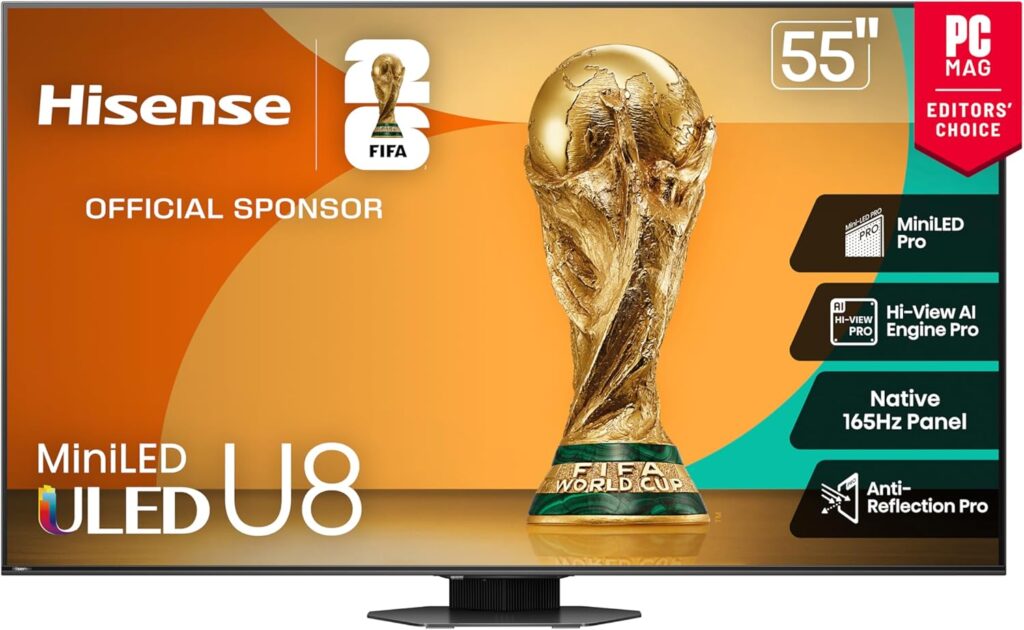
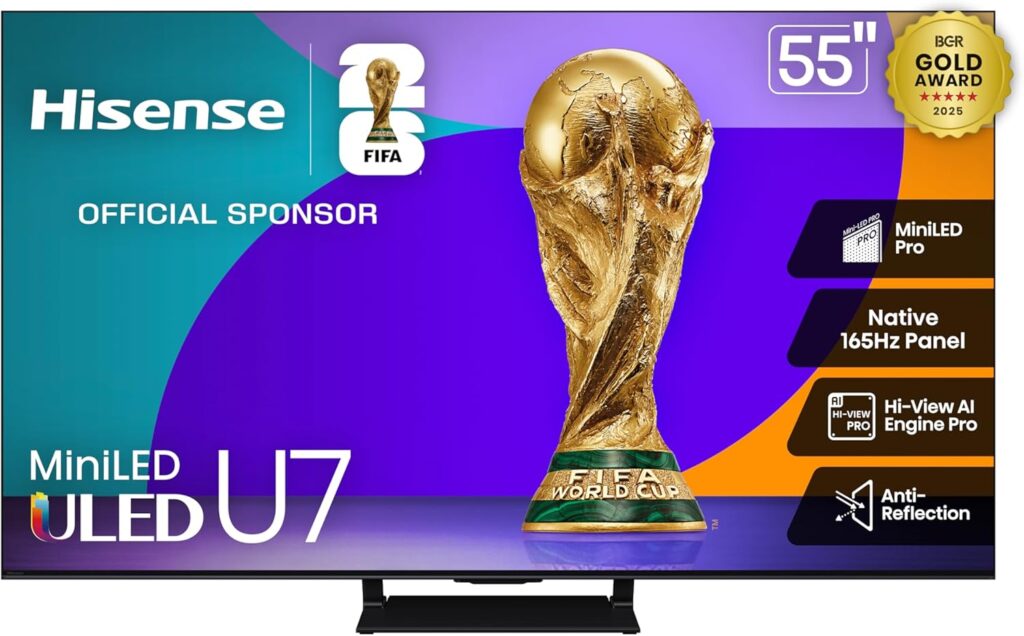
Hisense U-Series • U7 Mini-LED Hisense U7: The Premium “Value Flagship” That Makes Other TVs Hard to Justify When buyers ask for the sweet spot between performance and price, this is the TV that keeps coming up. The Hisense U7 doesn’t just compete with other brands’ mid-tier models—it chases their flagships while staying friendlier on the wallet. Updated for the 2025 model year Top Value Pick Watch: Hisense U7 in Action Featured Configuration Hisense 55" U7 Mini-LED ULED 4K UHD Best Premium Gaming Google Smart TV (55U75QG, 2025 Model) QLED, Native 165Hz, VRR 288, up to 3000 nits, HDR10+, Dolby Vision IQ · Atmos, IMAX Enhanced, 2.1.2-channel sound. This is the size most living rooms, bedrooms, and apartments can actually use—and it’s where the U7 really shines. Why it’s different: It behaves like a flagship in motion, brightness, and gaming features, but stays in a price range most buyers can realistically reach. Mini-LED + QLED Native 165Hz panel VRR up to 288 Up to 3000 nits Dolby Vision IQ · Atmos IMAX Enhanced Looking for the one TV that covers sports, movies, and serious gaming without paying flagship prices? This 55U75QG is the top value option we’d point most buyers to first. ➜ View the Hisense 55" U7 on Amazon This is an affiliate link. It helps support Technichole at no extra cost to you. Why the Hisense U7 Fits Real Homes Better Than “Spec Sheet” TVs When someone walks into a store asking what TV gives them the most for their money, they usually don’t mean “the absolute cheapest” or “the most expensive flagship.” They want the TV that feels like a big step up without feeling reckless. That’s where the Hisense U7 (55U75QG) lands—in that rare space where premium performance still makes financial sense. On paper, the U7 reads like a flagship: Mini-LED backlight, QLED color, native 165Hz refresh rate, and up to 3000 nits of peak brightness. In practice, it’s the combination of these features that delivers something most people notice immediately—clarity, punch, and control, whether you’re watching daytime sports or late-night cinema. Mini-LED + QLED: Bright, Controlled, and Actually Useful Mini-LED isn’t just a buzzword here. The tighter control over the backlight helps the U7 push highlights hard without turning dark scenes into a cloudy mess. Paired with QLED color, the U7 gives you the kind of contrast and saturation most people expect only from higher-priced models. If your room has windows, overhead lighting, or both, this matters. The U7’s brightness reserves and local dimming work together to keep details visible and colors lively, instead of washed out. It’s built for real living spaces, not only dark, dedicated theater rooms. Native 165Hz and VRR 288: Built Around Modern Gaming For gamers, the specs on this set aren’t marketing fluff—they’re the features that keep motion and control feeling locked in. A native 165Hz panel means the TV was designed with high frame rates in mind from the start, not as a software trick layered on afterward. With VRR up to 288 and a gaming-focused feature set, the U7 is ready for competitive play and fast-moving titles. You’re not just getting a TV that can “handle games”—you’re getting one that feels intentionally tuned for them, while still looking excellent with movies and streaming. Up to 3000 Nits: Bright Enough to Compete With Your Room Numbers don’t tell the whole story, but they do matter. Up to 3000 nits of peak brightness gives the Hisense U7 enough headroom to make HDR content look alive, not just slightly enhanced. That means sun reflecting off metal in an action scene, specular highlights in city skylines, and bright elements in sports content all stand out the way they were meant to—without you needing to dim every light in the room first. Dolby Vision IQ, Dolby Atmos, and IMAX Enhanced The U7 goes beyond checkboxes by supporting the formats people actually see in their apps: Dolby Vision IQ for smarter HDR tone-mapping based on room conditions, Dolby Atmos for rich spatial audio when paired with capable sound systems, and IMAX Enhanced for optimized content where available. You’re not just buying into a panel—you’re buying into a TV that’s ready for the content ecosystem people are actually using in 2025. Why We Call the Hisense U7 the “Top Value” Pick In most lineups, there’s a model that quietly does more than it should at its price. For Hisense, in 55 inches, the U7 (55U75QG) is that set. It’s the one we can recommend to a wide range of buyers—gamers, sports fans, movie watchers—without feeling like we’re asking them to over-spend just to keep up with the flagship race. If you want a TV that behaves like a premium model where it counts—motion handling, brightness, HDR impact, and gaming—while still landing in a reachable price bracket, this is the one that makes the most sense. For buyers who don’t want to compromise but also don’t want to chase the most expensive option on the wall, the Hisense U7 is our top value recommendation. Ready to Check Current Pricing? You can see the latest price, specs, and customer feedback for the 55-inch Hisense U7 here: Hisense 55" U7 Mini-LED ULED 4K UHD Best Premium Gaming Google Smart TV (55U75QG, 2025 Model) If you’re comparing several models and not sure which way to go, start with this one as your benchmark—then see what, if anything, really justifies costing more.

Hisense, TCL, Televisions

Hisense U6 & U7 vs TCL QM8K (65″): Why Hisense’s Premium U-Series Punches Above Its Price

Buying Guide · 65" Premium Mini-LED Showdown Hisense U6 & U7 vs TCL QM8K (65"): Why Hisense’s Premium U-Series Punches Above Its Price When you compare spec sheets instead of logos, it becomes clear that Hisense’s U-series plays in the premium space, not as a compromise. The 65" U6 delivers serious Mini-LED performance on a friendly budget, while the 65" U7 (65U75QG) pushes brightness, refresh rate, color, and audio to a level that challenges—and in key areas surpasses—flagship sets like the 65" TCL QM8K, often at a lower price. 65" Hisense U6 vs U7 vs TCL QM8K – 7 specs that actually matter This grid focuses on the seven most important things you will notice in real use: price, brightness, panel tech, refresh rate, color/HDR, audio, and smart/gaming features. The goal is simple: show why a premium Hisense U7 can be a smarter buy than another brand’s flagship. Spec focus Hisense U6 65" U65QF · Mini-LED QLED Hisense U7 65" U75QG · Mini-LED Pro TCL QM8K 65" 65QM8K · QD-Mini LED Price & value $547.99 Premium Mini-LED entry point that brings real HDR and gaming features to a friendly budget. $867.99 High-end performance positioning with features that rival and often beat other brands’ flagships while staying far below their prices. $1,297.99 Flagship pricing for TCL’s QD-Mini LED line, offering strong specs but at a noticeable premium over Hisense U7. Panel, backlight & brightness Mini-LED QLED with full array local dimming and up to 1,000 nits peak brightness. A dramatic upgrade over standard LED, ideal for mixed rooms and everyday HDR. Mini-LED Pro QLED with full array local dimming and up to 3,000 nits peak brightness. Built to cut through bright rooms and deliver blistering HDR highlights with excellent contrast. QD-Mini LED QLED with full array local dimming and very high HDR brightness. Impressive punch, but on paper the U7’s 3,000-nit spec is class-leading for its price. Refresh rate & gaming Native 144Hz panel with 144Hz Game Mode Pro and FreeSync Premium. Great for next-gen consoles at a value price, with smoother motion than 60Hz sets. Native 165Hz panel with Game Mode Ultra, FreeSync Premium Pro, and 4x HDMI 2.1. One of the fastest TV panels in its class—tailor-made for serious gaming and ultra-smooth motion. Native 144Hz panel with Motion Rate 480 and FreeSync Premium Pro. Strong gaming spec, but does not hit the U7’s 165Hz ceiling. Color system & HDR formats QLED Color with Quantum-style enhancement and Dolby Vision, HDR10+, HDR10, HLG support. Wide color and modern HDR at a very approachable price. QLED Color + Quantum HDR tuned by Hi-View AI Engine Pro. Supports Dolby Vision, HDR10+, HDR10, HLG with advanced tone mapping and anti-reflection for more consistent HDR. Enhanced QLED with QD-Mini LED and 4K HDR Pro processing. Also supports Dolby Vision, HDR10, HDR10+, HLG, delivering rich, saturated HDR. Audio & soundstage 2.1-channel, 40W with Dolby Atmos and DTS Virtual:X. Respectable built-in sound that pairs well with a future soundbar upgrade. 2.1.2-channel, 50W with Dolby Atmos, DTS Virtual:X, IMAX Enhanced and dedicated multi-channel surround design. One of the strongest integrated audio setups in its class; many users can comfortably skip a soundbar at first. Premium speaker system with Dolby Atmos and advanced surround modes. Good for a TV, but the U7’s 2.1.2-channel, 50W design is clearly built to compete above its price. Smart, tuner & connectivity Fire TV smart platform with Alexa built-in, Wi-Fi 6, and 4x HDMI (2x 2.1). Great fit for Amazon-centric homes and streaming-first setups. Google TV with Google Assistant built-in, support for Alexa and Apple Home, Wi-Fi 6E, and ATSC 3.0 (NextGen TV) tuner. Future-ready broadcast support plus the flexibility of the Google ecosystem. Google TV with Google Assistant plus support for Alexa and Apple Home, 4x HDMI and strong app coverage. A polished, modern platform similar to U7 but without ATSC 3.0 on many variants. Ideal buyer profile For buyers who want to step into Mini-LED, 144Hz, and Dolby Vision without overspending. A huge upgrade over bargain TVs while staying firmly in “smart money” territory. For people who want a premium home theater and gaming display—165Hz, up to 3,000 nits, powerful audio, and NextGen TV—without paying flagship brand pricing. It behaves like a top-tier TV, just without the top-tier logo tax. For buyers who like TCL’s branding and want a bright, feature-rich flagship at a higher price point. Strong set, but often out-valued by Hisense U7 on pure specs per dollar. U7: 165Hz, up to 3,000 nits, 2.1.2 audio U6: Mini-LED value with 144Hz QM8K: Flagship TCL at a higher price Why a premium Hisense can be the smarter flagship choice When you put them side by side, Hisense’s U7 looks less like a “step down” from flagship competitors and more like a smarter way to reach the same performance goals. You get Mini-LED Pro, up to 3,000 nits of brightness, a native 165Hz panel, strong color and HDR support, 2.1.2-channel Atmos audio, and a modern Google TV experience with ATSC 3.0—all for hundreds less than many competing flagships. The U6 exists for buyers who want to join that premium space without stretching as far financially, but the U7 is the model that really shows what Hisense can do when it brings high-end specs to a still-accessible price. View Hisense 65" U7 (U75QG) on Amazon View Hisense 65" U6 on Amazon View TCL 65" QM8K on Amazon

Hisense, Televisions

Who the Hisense 116UX Was Truly Crafted For

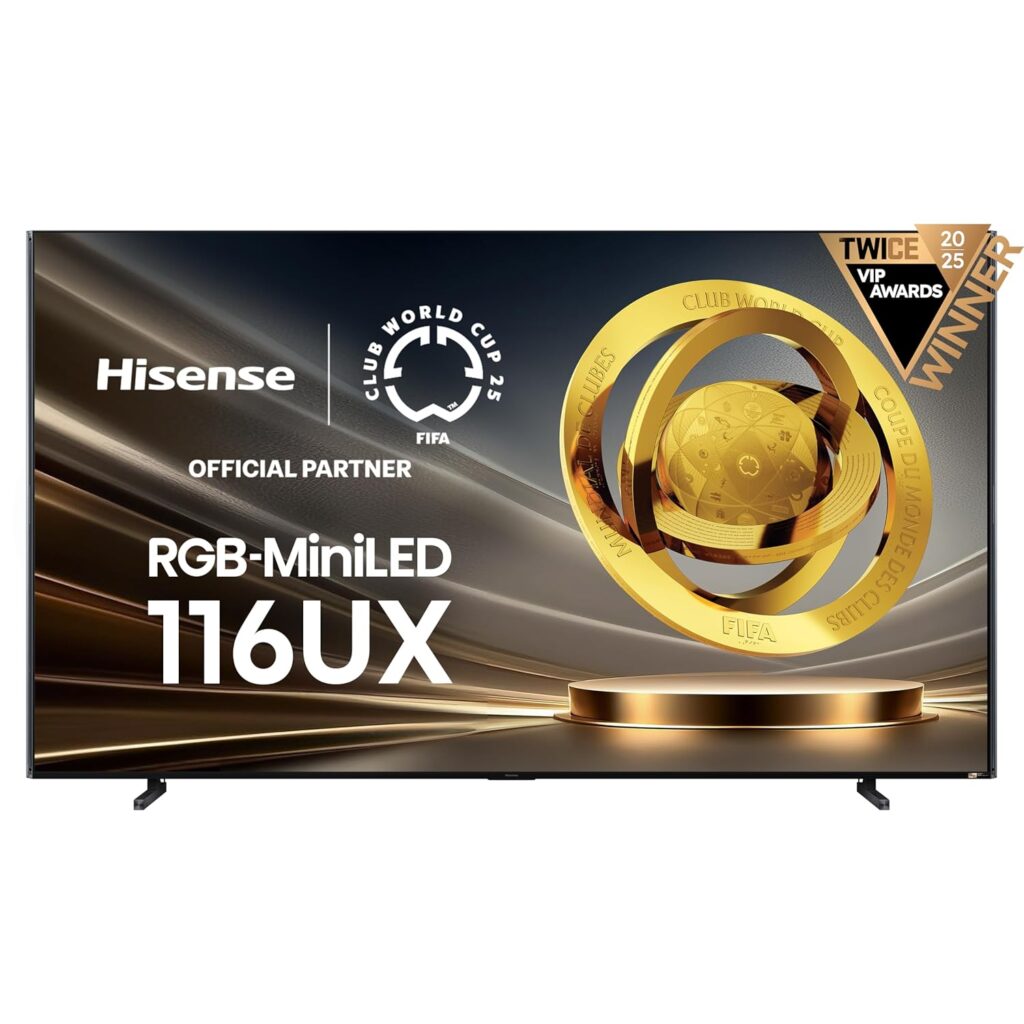
Perspective · Premium Experience Who the Hisense 116UX Was Truly Crafted For The Hisense 116-Inch UX RGB-Mini-LED TV isn’t just another oversized screen; it’s a window into what entertainment can feel like when technology disappears and immersion takes over. This TV wasn’t built for everyone — it was built for those who see watching movies, gaming, and streaming as a full experience rather than a passing activity. Why we crave something better than the movie theater A few months ago, I went to a local theater to see one of the year’s biggest films. The lights dimmed, the trailers rolled, and for a moment I felt that familiar anticipation — but it didn’t last. The couple behind me whispered through every quiet scene. Someone three rows up kept checking their phone. Every burst of laughter echoed over the dialogue. It reminded me that going out for a “premium” experience no longer feels premium at all. When I got home, I sat down and replayed a similar scene on a high-end display — and realized something: home entertainment has evolved beyond the theater for those who invest in the right equipment. The Hisense 116UX is part of that evolution. For those who expect the best — and actually get it The 116UX isn’t about showing off. It’s about finally being able to see — and hear — films, concerts, and games the way they were meant to be experienced. With its RGB Mini-LED backlight, this display doesn’t just brighten your room; it paints it with color so pure and precise that even seasoned cinematographers would appreciate its fidelity. Whether you’re watching a 4K HDR masterpiece, streaming a live concert, or revisiting your favorite series, the 116UX takes every pixel and brings it to life. It’s the kind of realism that casual watchers don’t expect until they see it — and once they do, there’s no going back. Immersion is not a feature, it’s a feeling Every piece of the 116UX’s design is crafted to deepen immersion. The 165 Hz native refresh rate ensures that every pan, chase, and camera move feels lifelike — not simulated. When you watch sports, it’s like being in the stands. When you play games, it’s like stepping into the world itself. But the visual experience is only half of it. Hisense’s 6.2.2 CineStage X audio system pushes sound into three-dimensional space. Dialogue is crisp, background detail feels layered, and musical scores bloom around you without drowning anything out. You don’t just watch — you’re there. How it transforms casual watchers For years, most people bought TVs based on price and brand name, assuming the big manufacturers would automatically deliver the best. But as anyone who has compared models side by side knows, innovation isn’t reserved for the same old brands anymore. The 116UX is proof that Hisense belongs among the leaders in cutting-edge design and performance. What’s fascinating is how this kind of display reshapes your habits. You start choosing movies differently. You notice cinematography details you used to overlook. You turn on a nature documentary for five minutes and end up sitting there for an hour, lost in the clarity and contrast. The 116UX doesn’t just make picture quality better; it changes how you experience your downtime. Personalized cinema, perfected Watching at home used to mean compromise. You’d trade brightness for convenience, or settle for built-in speakers that couldn’t fill the room. The 116UX eliminates those trade-offs. Its RGB Mini-LED panel brings out lifelike color in any light. Its 6.2.2 sound fills the room like a professionally tuned system. Its Google TV interface means everything you love to watch is one voice command away. The chatter, the interruptions, the overpriced popcorn — all gone. What’s left is the reason we fell in love with movies in the first place: that moment when the story takes over and the world outside disappears. Prefer a more room-friendly size? The 100" Hisense UX might be your match. The 100" Hisense UX delivers the same next-generation color, brightness, and motion control in a slightly smaller footprint that fits comfortably in more homes and dedicated media rooms. It’s designed for those who want cinematic scale and precision without crossing into the extremes of 116 inches. Quick Specs Tap to expand Model: Hisense UX 100UX (2025) Screen Size: 100" Class Resolution: 4K UHD (3840 × 2160) Backlight: RGB Backlight Mini-LED Peak Brightness: Up to 10,000 nits Color Processing: 3D Color Master Pro Refresh Rate: Native 144 Hz panel HDR Support: Dolby Vision, HDR10+, HLG Audio System: 4.1.2 CineStage X Smart Platform: Google TV MSRP: $10,999.99 View the 100" Hisense UX on Amazon The 116UX isn’t just a TV — it’s peace, presence, and perfection The Hisense 116UX is made for those who have outgrown the noise of public entertainment and want to rediscover what it means to truly enjoy a film. It’s for the dreamers, the audio purists, the weekend binge-watchers, and the gamers who see immersion as art. Whether you choose the colossal 116" or the perfectly balanced 100" UX, both redefine what a home theater can be — beautiful, bold, and personal. Explore the 116" Hisense UX Affiliate disclosure: When you purchase through our Amazon links, Technichole may earn a small commission at no extra cost to you. We highlight Hisense products because they truly deliver unmatched performance for their price class.

Hisense, Televisions

The Hisense 116UX: Why a $24,999 TV Can Actually Be Worth It

Ultra-Premium Home Theater · Hisense UX Series The Hisense 116UX: Why a $24,999 RGB Mini-LED Monster Can Be Worth Every Dollar At 116 inches, the Hisense 116-Inch Class Premium UX Series RGB-MiniLED 4K UHD HDR Google Smart TV (116UX, 2025) is less of a television and more of a home theater event. With an RGB Mini-LED backlight, up to 8,000 nits of peak brightness, a native 165 Hz panel, and a built-in 6.2.2 CineStage X sound system, it is designed for people who want to stop “watching TV” and start living inside their movies, sports, and games. The price—$24,999.99—is serious, but so is what this display brings to your space. View the 116" Hisense UX on Amazon 116" 4K RGB Mini-LED Up to 8,000 nits of brightness Native 165 Hz refresh rate 6.2.2 CineStage X audio Google TV smart platform Quick Specs Tap to expand Model: Hisense UX 116UX (2025) Screen Size: 116" Class Resolution: 4K UHD (3840 × 2160) Backlight: RGB Backlight Mini-LED Peak Brightness: Up to 8,000 nits Color Processing: 3D Color Master Pro Refresh Rate: Native 165 Hz panel HDR Support: Dolby Vision, HDR10+, HLG Audio System: 6.2.2 CineStage X Smart Platform: Google TV Connections: HDMI 2.1 (ARC/eARC), Wi-Fi, Ethernet MSRP: $24,999.99 RGB Mini-LED: Not just brighter, but smarter light Most LED-based TVs rely on white or blue LEDs shining through color filters. The 116UX does something much more ambitious: it uses an RGB Mini-LED backlight made up of tiny red, green, and blue emitters. That means the light behind each part of the image is inherently colored and can be controlled with far more precision. In real-world viewing, this delivers two huge benefits. First, it allows the TV to produce more accurate color at extremely high brightness levels. HDR highlights do not just become “whiter”—they retain their intended color. Fire looks like fire instead of a blown-out patch of orange-white. Neon lights in a night scene glow with a believable intensity instead of bleeding into the shadows. Second, RGB Mini-LED gives the local dimming system much finer control. With thousands of tiny LEDs working behind the scenes, the 116UX can carve bright objects out of deep black backgrounds without the distracting halos and blooming that can ruin the illusion on lesser displays—especially at this giant size. Why 165 Hz matters more when the screen is this huge On a 55-inch TV, motion blur and judder are annoying. On a 116-inch TV, they are impossible to ignore. That is where the native 165 Hz panel on the Hisense 116UX becomes a game-changer. For fast-moving content—sports, action movies, racing sims, shooters—a higher refresh rate means less stutter, clearer motion, and fewer artifacts. You see the ball’s trajectory, not a blur trail. Camera pans across stadiums or landscapes feel smooth, not choppy. When you pair that with HDMI 2.1 features like VRR (variable refresh rate) and ALLM (auto low latency mode), the 116UX basically becomes a wall-sized gaming monitor with cinema-level picture quality. The important part is that this smoothness does not have to come with that over-processed “soap opera” look many people hate. With the right settings, you can balance motion clarity and cinematic feel so that films look intentional and games look razor sharp. At 116 inches, that balance is what keeps the experience immersive rather than distracting. 4K HDR that pulls you into the frame Specs are one thing; what it feels like to sit in front of this TV is another. Imagine starting a 4K HDR movie on the 116UX. The room is dim, but not pitch-black—you do not have to live like a cave dweller to enjoy this set. The opening shot fades in: a city at night, thousands of tiny lights scattered across skyscrapers, reflections shimmering in windows and puddles. On a typical TV, that scene looks nice. On the 116UX, it feels like standing on a balcony overlooking the city. The combination of 4K resolution, RGB Mini-LED contrast, and huge peak brightness creates layers of detail that your eyes naturally wander through. Individual windows are distinct. The glow from streetlights pools realistically on the pavement. Distant buildings are not just blocks of gray—they have texture and depth. HDR highlights are where this TV really flexes. Explosions, sunrises, chrome reflections, sparks, and specular highlights in water all retain subtle gradations instead of flattening out. The 116UX’s brightness gives those highlights a sense of intensity, while its dimming system keeps surrounding blacks rich and deep. Dark scenes hold onto detail instead of dissolving into muddy gray. This is the kind of image fidelity that makes time disappear—you hit play, and suddenly it is three episodes later. 6.2.2 CineStage X: when the TV sounds like a full system A screen this large begs for serious sound, and the 116UX shows up prepared. The built-in 6.2.2 CineStage X audio system is not the usual “token speakers behind the bezel.” It is a multi-channel array designed to create a wide, tall, and deep soundstage without requiring an immediate soundbar upgrade. Two sub channels provide real low-frequency presence, so you feel rumbles and impact rather than just hearing thin bass. Height channels fire sound upward to simulate overhead effects, bringing rain, aircraft, and ambient sound into a more three-dimensional space. Front and side drivers handle dialogue and directional effects. In practice, this means that: Dialogue stays intelligible, even when action scenes get loud. Sound effects wrap around the seating area instead of feeling stuck to the screen. Scores and soundtracks have room to swell and breathe. For many people, that level of built-in performance will be more than enough—especially on day one. Enthusiasts can always add external audio later, but CineStage X gives you a legitimately cinematic starting point without extra boxes and cables everywhere. Designed for real rooms, not just showrooms Ultra-premium displays sometimes assume a perfect environment: fully light-controlled rooms, custom installers, and dedicated theaters. The Hisense 116UX certainly thrives in those conditions, but it is also built to handle real-life spaces. The extreme brightness

Hisense, What The Spec

Why the Hisense U8’s Anti-Glare Screen Might Matter More Than Its 4K or Nits

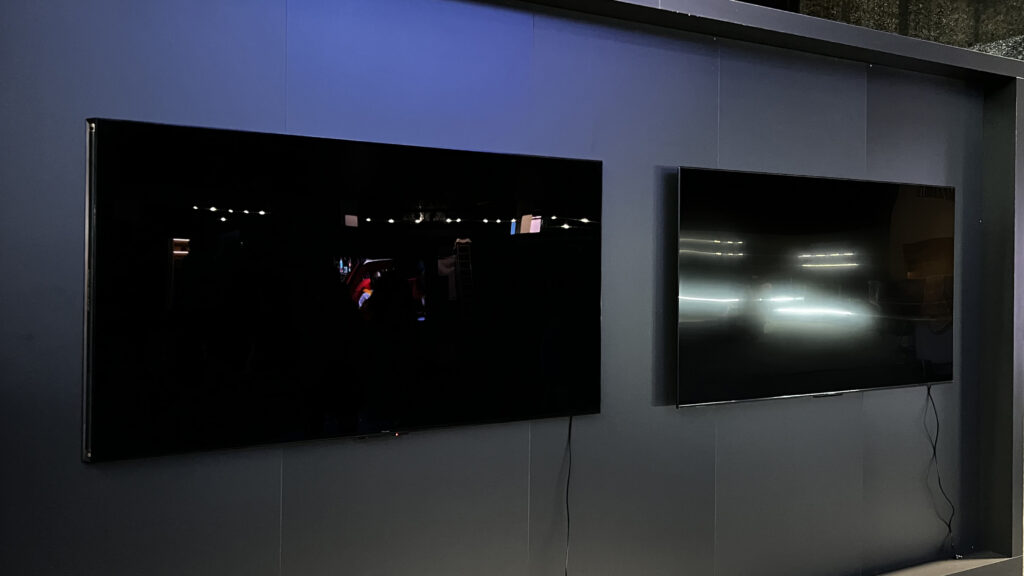
What The Spec · Hisense U8 Anti-Glare & Low-Reflection Screen Why the Hisense U8’s Anti-Glare Screen Might Matter More Than Its 4K or Nits Everyone talks about brightness and contrast, but if your TV turns into a mirror every afternoon, none of that matters. The Hisense U8 series adds serious anti-glare and low-reflection tech on top of its Mini-LED brightness, making it one of the most practical bright-room TVs you can buy. Here is what Hisense is doing with the U8’s screen, how it works, and why you should care if you have windows, lamps, or glossy floors anywhere near your TV. Hisense U8 anti-glare screen Low-reflection coating explained Best TV for bright rooms U8 reflection handling Why screen finish matters On paper, the U8 series is all about peak brightness and Mini-LED contrast. In practice, what makes it usable in the real world is the screen finish: Hisense combines a bright panel with anti-glare and low-reflection tech so you are watching the content, not your own reflection or the window behind you. What “anti-glare” actually means on the Hisense U8 When Hisense describes the U8 family as having an anti-glare, low-reflection screen, it means the panel and its outer coating are designed to bend and diffuse incoming light instead of reflecting it straight back at you like a mirror. The screen finish is tuned to keep harsh reflections under control, even when the room is lit by overhead fixtures or daylight. You will often see language like “Anti-Glare and Low Reflection” or “Anti-Reflection” in U8 marketing and spec sheets. In simple terms, this indicates an anti-reflective coating layered over the glass that reduces the intensity of reflections and spreads them out. The goal is not to eliminate light—that would be impossible—but to make reflections softer, dimmer, and easier to ignore while the TV’s brightness takes center stage. If you have ever watched a dark scene and mostly seen a reflection of your coffee table instead of the show, you already know why this matters. Anti-glare alone will not fix a dim TV, and brightness alone will not fix a mirror-like screen. The Hisense U8 series works because it tackles both sides: very high brightness plus a thoughtfully engineered screen finish. The different anti-glare approaches across Hisense U8 models Hisense does not label “types” of anti-glare panels in big bold letters, but across U8 generations you see a consistent pattern in how the screen handles reflections. Here are the main ideas behind what Hisense is doing: Semi-gloss, low-reflection finish Bright-room specialist The U8’s semi-gloss screen finish is designed to strike a balance between rich contrast and reflection control. Instead of a fully glossy “mirror,” you get a surface that still delivers punchy highlights and deep blacks but keeps reflections smaller, dimmer, and more diffused. That makes a huge difference in rooms with overhead lights or windows opposite the TV wall. Anti-glare / low-reflection coating Tuned surface layer On top of the glass, Hisense uses an anti-glare coating to scatter incoming light. Bright point sources— like a lamp or a sunny patch on the floor—are turned into broader, gentler highlights instead of tight, sharp glare spots. Your eyes naturally focus on the image instead of being pulled toward those hot spots. Enhanced “anti-reflection” variants Aggressive reflection control On newer and higher-end U8 variants, Hisense pushes this concept further with enhanced anti-reflection treatments meant specifically for very bright, window-heavy rooms. These screens are engineered so that even when the room lights are on, the picture still looks defined and high-contrast instead of washed out. Mini-LED + anti-glare synergy Brightness meets control The U8 is a Mini-LED TV, which means it can push extreme brightness with fine-grained local dimming. When that kind of light output hits a well-designed anti-glare surface, the effect is powerful: instead of raising the brightness of everything—including reflections—it raises the brightness of the image while keeping reflections relatively subdued. Your content wins the battle against glare. Panel type differences (VA vs wide-angle) Contrast vs viewing angle Depending on size and region, some U8 models use VA panels (great native contrast), while others use wide-angle variants like ADS/IPS-style panels (better off-axis viewing). Regardless of panel type, the anti-glare treatment is designed to manage reflections across the screen so that both center and off-axis seats get a clear, watchable picture in bright spaces. Real-world behavior in bright rooms Fewer blinds, more watching In everyday use, owners of U8 models often report that where they once had to close blinds or dim lights to watch TV, they can now leave the room closer to how they like living in it. That is the whole point of a good anti-glare panel: making the TV work with your space instead of forcing you to redesign your space around the TV. How the U8’s anti-glare screen helps in real rooms Specs are one thing; how they feel at 3 p.m. with sunlight coming in is another. The reason the Hisense U8’s anti-glare panel matters is simple: most people do not watch TV in a perfectly controlled, dark home theater. They watch in living rooms with windows, apartments with blinds that never quite close, and open spaces where kitchen lights spill onto the screen. A good anti-glare, low-reflection finish does three key things in these spaces: Reduces mirror-like reflections. Instead of seeing a crisp reflection of a lamp or window, you see a softened, blurred highlight that is easier for your eyes to ignore. Protects perceived contrast. Even if your TV has great native contrast, a bright reflection can flatten shadows and wash out dark scenes. Anti-glare keeps blacks closer to black and colors closer to how they should look. Helps with eye comfort. Constantly competing with bright reflections makes your eyes work harder. A screen that tames glare reduces strain over long viewing sessions—especially for news, sports, or gaming marathons. On a U8, this matters even more because the set is bright enough to take advantage of the coating. You are not just softening

Hisense, Televisions

Hisense QD6 & Insignia: Which One?

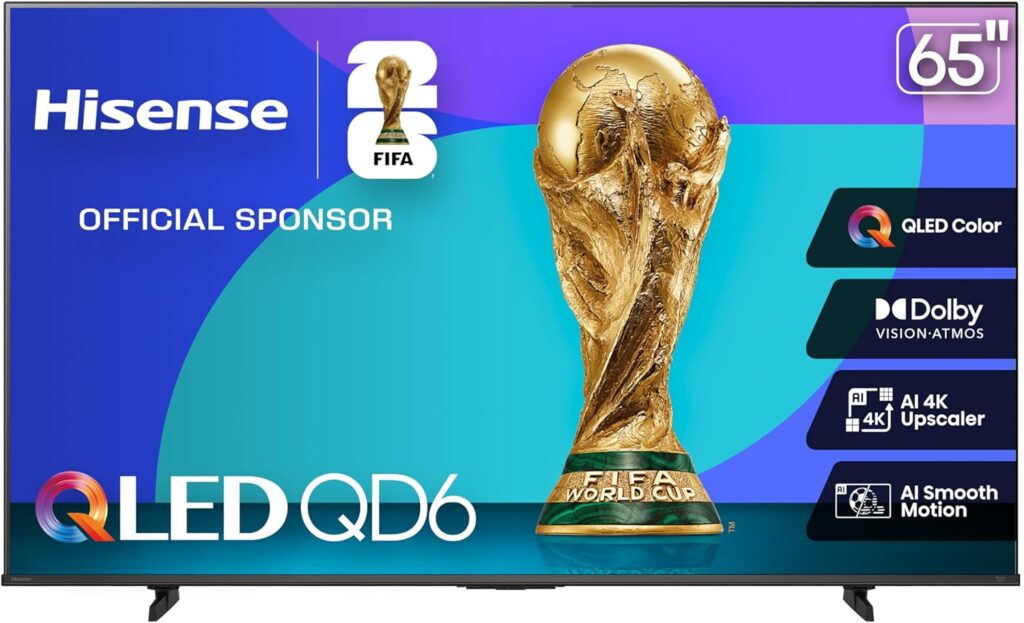
If you’re shopping for a budget TV, it’s completely normal to feel stuck between brands like Hisense and Insignia. Both promise 4K, smart features, and affordability, but when you start comparing real-world performance, the Hisense QD6 stands out as the better buy. It gives you more color, brightness, and life in your picture—without breaking the bank. If you’re looking for a recommendation, the 65-inch Hisense QD6 is one of the best values available on Amazon right now. The big picture: both are affordable, but not equal On paper, both the Hisense QD6 and Insignia Fire TV models are “budget 4K smart TVs” with streaming built in. You’ll get the basics like 4K resolution, Alexa voice control, and access to every major streaming app. But the QD6 belongs to Hisense’s QLED lineup, which uses Quantum Dot Color technology for more vivid and accurate tones. It also supports Dolby Vision HDR and Dolby Atmos sound—features that bring a cinematic feel even to everyday viewing. The Hisense QD6 offers this blend of affordability and performance that you rarely see in the budget category. Insignia’s Fire TVs, while decent for casual use, typically deliver a more basic viewing experience. They rely on standard LED panels and often struggle with brightness and contrast, especially in bright rooms. You’ll still get a nice image for the price, but it won’t look as alive as what the QD6 delivers. Why the Hisense QD6 picture looks better When you compare these TVs in person, the difference is immediate. The QD6’s Quantum Dot technology produces over a billion colors, meaning the reds, greens, and blues you see are richer and closer to what the content creators intended. This is something Insignia’s basic LED panels simply can’t replicate. The QD6 also handles HDR (High Dynamic Range) much more effectively. With support for Dolby Vision and HDR10+, it’s able to adjust brightness and contrast on a scene-by-scene basis, giving you more depth in dark scenes and more pop in bright ones. The Insignia models technically support HDR formats, but their lower brightness means highlights don’t stand out as much. On the Hisense, fireworks look like fireworks—not just bright blobs on the screen. If you’re watching action movies, sports, or colorful shows like nature documentaries, the QD6’s extra color range and brightness really pay off. Even everyday TV looks sharper and more refined. Real-world performance in bright rooms A lot of budget TVs look fine in a dark store or bedroom, but the real test comes when you turn them on during the day. Sunlight and bright indoor lighting can make cheaper panels look washed out. The Hisense QD6 handles those situations well thanks to its solid brightness and anti-reflective design. Whether you’re watching morning news in a sunlit living room or binging Netflix with the blinds open, you’ll still get solid contrast and visibility. The Insignia, on the other hand, tends to lose that vividness under bright conditions, and the picture starts to appear dull. This makes the QD6 a great option for family rooms or open living spaces where you can’t always control lighting. Better HDR for movie lovers HDR is what separates a good 4K image from a great one. The Hisense QD6’s inclusion of Dolby Vision and HDR10+ puts it ahead of most budget competitors. It dynamically adjusts brightness and color so each frame looks optimized—blacks stay deep, highlights glow, and skin tones stay natural. Insignia TVs might say they support HDR, but without the brightness or processing power to back it up, the effect is minimal. If you’re a movie lover, this difference is clear. On the QD6, explosions, sunsets, and night scenes feel more cinematic and three-dimensional. If you’ve ever wondered why a movie looks better on a friend’s more expensive TV, this is part of the reason. The Hisense QD6 gives you that premium HDR experience without paying premium prices. Gaming performance on a budget If gaming is part of your household routine, the QD6 again wins out. It includes Game Mode Plus, which reduces input lag so your controls feel more immediate and responsive. On some versions, you’ll even get Auto Low Latency Mode (ALLM) and Variable Refresh Rate (VRR) for smoother motion during fast-paced gameplay. That’s impressive for a TV in this price range. Insignia TVs can handle gaming, but they lack these advanced features. If you’re playing newer consoles like a PlayStation 5, Xbox Series X, or even a gaming PC, the QD6 provides a noticeably smoother experience—especially in fast-action titles or sports games. Smart experience: Fire TV made better Both the Hisense QD6 and Insignia models use Amazon’s Fire TV platform, so you’ll get all the streaming services you love—Netflix, Disney+, Hulu, Prime Video, YouTube, and more—right out of the box. Alexa voice commands are built in, allowing you to search for shows, control your smart home, or check the weather hands-free. But while the Fire TV interface is the same, the hardware running it makes a difference. The QD6 feels snappier and smoother when navigating menus or switching apps. Hisense also builds its TVs with a more polished aesthetic—thinner bezels, better stand design, and more solid build quality than Insignia’s basic frames. When it’s sitting in your living room, it simply looks and feels like a higher-end TV. Long-term reliability and value Insignia TVs are primarily designed as affordable house-brand models, built to meet a low price point rather than push performance boundaries. They’re fine for simple setups, but they’re not known for long-term durability or consistent panel quality. Hisense, on the other hand, has built a reputation for making feature-rich TVs that punch above their price class. The QD6 continues that tradition—it’s a budget TV that feels mid-range in most ways that matter. Hisense’s growing presence in the U.S. market means stronger quality control and better firmware support over time, something that’s often overlooked but important for keeping your TV updated. When you factor in how long you’ll likely keep it—five years or more—the small difference in price

Hisense, Televisions

Why Hisense Makes Sense: The Smarter Choice for Modern TV Buyers

Walk into any electronics store or browse the TV section online, and the first thing you’ll notice is the dominance of the same big names — Samsung, Sony, and LG. Their displays are everywhere, their marketing is loud, and their prices are often steep. But behind the glossy showrooms and expensive ads, another truth has quietly emerged: a smaller brand called Hisense has been delivering televisions that match or outperform these giants at a fraction of the cost. Choosing a TV used to be about brand recognition. Today, it’s about performance, technology, and total value. And that’s where Hisense makes sense — literally. The Shift in the TV Market Ten years ago, premium picture quality and advanced technology were tightly controlled by the top-tier manufacturers. OLED panels, high refresh rates, and dynamic HDR were reserved for those willing to pay premium prices. But the landscape has changed dramatically. Brands like Hisense and TCL have invested heavily in R&D, manufacturing precision, and strategic partnerships with panel suppliers. They’ve learned to innovate quickly, adopt new technologies early, and integrate them into affordable models. This shift means consumers no longer need to spend $2,000 or more for cutting-edge performance. In fact, many Hisense models deliver equal or better brightness, local dimming control, and motion clarity than their big-brand rivals at half the cost. The result is a democratization of technology — and a growing awareness among smart buyers that paying extra for a logo doesn’t necessarily buy you a better experience. Beyond the Badge: What Really Matters in a TV When most people evaluate a television, they start with the brand name. But what actually affects the viewing experience? Brightness, contrast, color accuracy, processing, and refresh rate are the true pillars of image quality. Hisense’s recent lineup, such as the U8 series, excels in all of these categories. The brand has become known for its Mini-LED backlight technology, capable of producing upwards of 5,000 nits of brightness — levels that rival or surpass high-end models from much more expensive competitors. The company’s Hi-View Engine Pro handles image processing with remarkable precision, using AI-driven algorithms to enhance clarity and balance color dynamically. Combined with wide color gamut coverage, Dolby Vision IQ support, and a native 165 Hz refresh rate on certain models, Hisense televisions aren’t just keeping up with the industry leaders — they’re pushing the standards forward. So while a shopper might recognize a Samsung or Sony first, it’s Hisense that’s quietly delivering the performance metrics that professionals and enthusiasts actually look for. The Cost of the Brand Name Big brands spend billions annually on marketing and retail placement. That cost doesn’t vanish — it’s passed down to you, the buyer. Every polished commercial, celebrity endorsement, and airport billboard adds a few extra dollars to the sticker price of that TV sitting on the shelf. Hisense takes a different approach. The company relies more on product quality and word-of-mouth reputation than traditional advertising. Instead of paying for recognition, it focuses on manufacturing efficiency and component optimization, which translates into lower prices without cutting corners on performance. It’s the same reason many value-driven consumers are moving away from household-name appliances and toward less-advertised but better-equipped alternatives. For instance, a 65-inch flagship QLED from a top-tier brand might sell for $2,499, while a comparable 65-inch Hisense U8 model with Mini-LED backlighting and Dolby Atmos audio costs around $1,299. That’s a savings of over $1,000 for a TV that, in most lighting conditions, performs nearly identically. Paying extra for a badge used to make sense when the technology gap was wide. Today, that premium often buys little more than the name itself. Performance Without Compromise When reviewers and consumers compare Hisense to higher-priced alternatives, one theme appears repeatedly: performance parity. Take brightness, for example. The Hisense U8 routinely measures higher peak brightness than some of Samsung’s and Sony’s step-down QLED models. That advantage matters for anyone watching TV in bright rooms — apartments, living rooms with large windows, or open floor plans. Motion handling and gaming features are equally strong. Hisense’s 165 Hz panels and Variable Refresh Rate (VRR) capabilities minimize tearing and input lag for smooth gaming sessions on both consoles and PCs. Features like Game Bar interfaces and Auto Low Latency Mode (ALLM) come standard, while many “premium” TVs charge more for the same. The audio experience also deserves recognition. Hisense integrates 4.1.2-channel Dolby Atmos systems directly into its panels. That means cinematic sound without the need for an expensive external system that could disturb neighbors — a major advantage for apartment dwellers. This isn’t a stripped-down experience for budget shoppers. It’s a complete home theater experience designed intelligently and affordably. Durability and Reliability: Dispelling the Myths One misconception about emerging brands is that lower price equals lower quality. In Hisense’s case, that assumption doesn’t hold up under scrutiny. The company has built a strong reliability record, earning recognition from both consumers and independent reviewers. Hisense backs its higher-end televisions with a two-year warranty, double what most competitors provide. That confidence stems from their quality control processes, which have improved substantially over the past decade. The same assembly lines that produce Hisense’s own panels also manufacture components for other well-known brands — an industry secret that underlines how interconnected TV manufacturing has become. While no product is immune to defects, Hisense’s reliability now sits comfortably within industry averages, with many users reporting years of consistent performance. The combination of quality assurance and extended coverage makes the brand a safe bet rather than a gamble. The Value of Being an Informed Buyer The smartest way to buy a television today is not to chase the biggest name, but to understand what you’re actually paying for. An informed buyer looks at specifications rather than slogans. They know that Full Array Local Dimming, Quantum Dot color, HDR support, and refresh rate matter more than the size of the marketing budget behind the product. When you strip away the branding, Hisense often matches flagship competitors feature-for-feature —

Hisense, Televisions

The Best TV for Small Apartments: Why the Hisense U8 Is the Smartest Choice for Compact Living

Choosing the right television for a small apartment is a balancing act. You need something powerful enough to deliver cinematic quality but compact enough not to overpower the room—or your neighbors. Many residents in condos or apartments face the same dilemma: a TV that’s too large can dominate the space, while a smaller, cheaper one often lacks the features that make watching enjoyable. That’s where the Hisense U8 series, available in 55-inch and 65-inch sizes, hits the ideal middle ground. With advanced Mini-LED Pro backlighting, Dolby Vision IQ, and integrated Dolby Atmos audio, the U8 delivers premium performance without needing an external sound system. It’s a rare blend of power, precision, and practicality that fits beautifully into modern apartment life. Designed for Real-World Spaces In smaller living areas, every inch of screen and every lumen of brightness matters. The Hisense U8 uses Mini-LED technology to pack thousands of tiny light zones into a thin panel. The result is exceptional contrast and brightness without adding bulk. The 55-inch U8 feels perfect for apartments where the sofa sits six to eight feet from the screen. It fills your field of vision without overwhelming the wall. The 65-inch U8 suits open-plan apartments or spaces where you want a touch of theater while still keeping proportions reasonable. Both sizes feature an elegant, slim-bezel design with sturdy legs that allow placement on narrow stands. The overall footprint stays manageable—even in rooms under 300 square feet. Brightness That Defies Sunlight Apartment dwellers know how frustrating it is when sunlight washes out a TV’s picture. With peak brightness up to 5,000 nits on supported HDR content, the U8 simply cuts through daylight glare. Its Anti-Reflection Pro coating softens reflections from nearby windows and lamps, so you can enjoy your favorite shows in the middle of the day without closing blinds. In evening viewing, the Full Array Local Dimming Pro system maintains deep blacks and vibrant highlights. Whether you’re streaming a film on Netflix or catching an NBA game, the contrast stays crisp and lifelike even in rooms with mixed lighting. A Compact TV With Big-Room Sound One of the best reasons the U8 stands out for apartment living is its built-in 4.1.2-channel Dolby Atmos audio system. Most thin televisions struggle to deliver any bass or directionality, pushing buyers toward bulky soundbars or external subwoofers that easily disturb neighbors. The U8 takes a smarter route. By using upward- and side-firing speakers integrated behind the panel, it creates a sense of height and width that mimics surround sound—without excessive volume. Voices remain clear even at low settings, and the bass is present enough to give movies weight without shaking the walls. You can enjoy late-night viewing without sacrificing richness or dialogue clarity. For apartments with shared walls, this is a genuine advantage. Connectivity Made Simple Space in a small apartment often comes at the expense of cable management. Hisense addresses this by including multiple HDMI 2.1 ports, Wi-Fi 6, and Bluetooth connectivity in a clean, rear-facing layout. Gamers will appreciate the 165 Hz native refresh rate and Variable Refresh Rate (VRR) support, which make fast-paced titles fluid and responsive. For streaming, the Google TV platform keeps everything in one place—Netflix, Hulu, Disney+, Prime Video—without needing an external device. Voice commands through Google Assistant work reliably for quick searches or adjusting volume hands-free. If your apartment setup includes a laptop or tablet, you can easily cast wirelessly to the U8’s large display. No clutter, no extra boxes, no dangling HDMI cables. Efficient and Apartment-Friendly Energy Use Despite its performance, the U8 is surprisingly efficient. The Mini-LED system consumes less power than older full-array LCDs at similar brightness levels. With the Eco mode enabled, the TV adjusts backlight intensity to ambient light, saving energy when full output isn’t necessary. For renters conscious of electric bills or energy footprints, the U8 delivers an excellent performance-to-watt ratio—ideal for extended binge sessions or all-day background use. Image Quality That Elevates Small-Space Viewing A small room puts you physically closer to your screen, which means imperfections are easier to spot. That’s where the U8’s Hi-View AI Engine Pro makes a difference. It uses scene-based processing to refine edges, reduce compression noise, and enhance depth without exaggeration. Color reproduction covers nearly the full DCI-P3 spectrum, giving skin tones a natural warmth and ensuring animated or sports content looks vivid but realistic. You won’t need to sit at a perfect angle either—the wide viewing range maintains consistency even when seated off-center on a sectional sofa. Why Size Matters in Apartment Settings The 55-inch and 65-inch versions offer a practical compromise between immersion and spatial comfort. Too small, and text and detail vanish from a normal sofa distance; too large, and the screen feels intrusive or reflects every lamp in the room. At typical apartment viewing distances—five to nine feet—these two sizes hit the visual “sweet spot.” You get full 4K resolution clarity without visible pixel structure and without needing to rearrange furniture for optimal placement. Easy Setup and Low Maintenance Small apartments benefit from simplicity, and setup on the U8 couldn’t be easier. Once unboxed, connecting power and Wi-Fi takes minutes. The stand is sturdy yet quick to assemble with standard screws, and wall mounting requires only a basic VESA 300 × 200 bracket. Hisense’s firmware updates automatically through the Google TV interface, so you don’t have to track downloads or USB installs. Maintenance essentially boils down to dusting the panel occasionally. Apartment-Safe Volume and Night Mode An underrated feature for those living close to neighbors is the U8’s Night Sound Mode. It compresses dynamic range so explosions or sound effects don’t spike in volume while dialogue stays audible. Combined with the clear front-facing speaker layout, it lets you enjoy movies at low to moderate volumes without losing intensity or emotional weight. If you prefer private listening, the Bluetooth connection pairs instantly with wireless headphones or earbuds—another thoughtful touch for apartment dwellers. Value That Outperforms Its Price Compared to flagship models from Samsung or Sony, the

Technichole is an Orlando, Florida–based home theater review site focused on TVs, soundbars, and smart setups that fit real homes and real budgets. We provide clear, honest guidance to help you build the perfect entertainment space without the hype.

© 2025 Created with 407 Development

Scroll to Top